National postsecondary data provide the broader backdrop: NCES reports that female college enrollment rates remain higher than male rates (NCES).
Indiana is going the other direction.
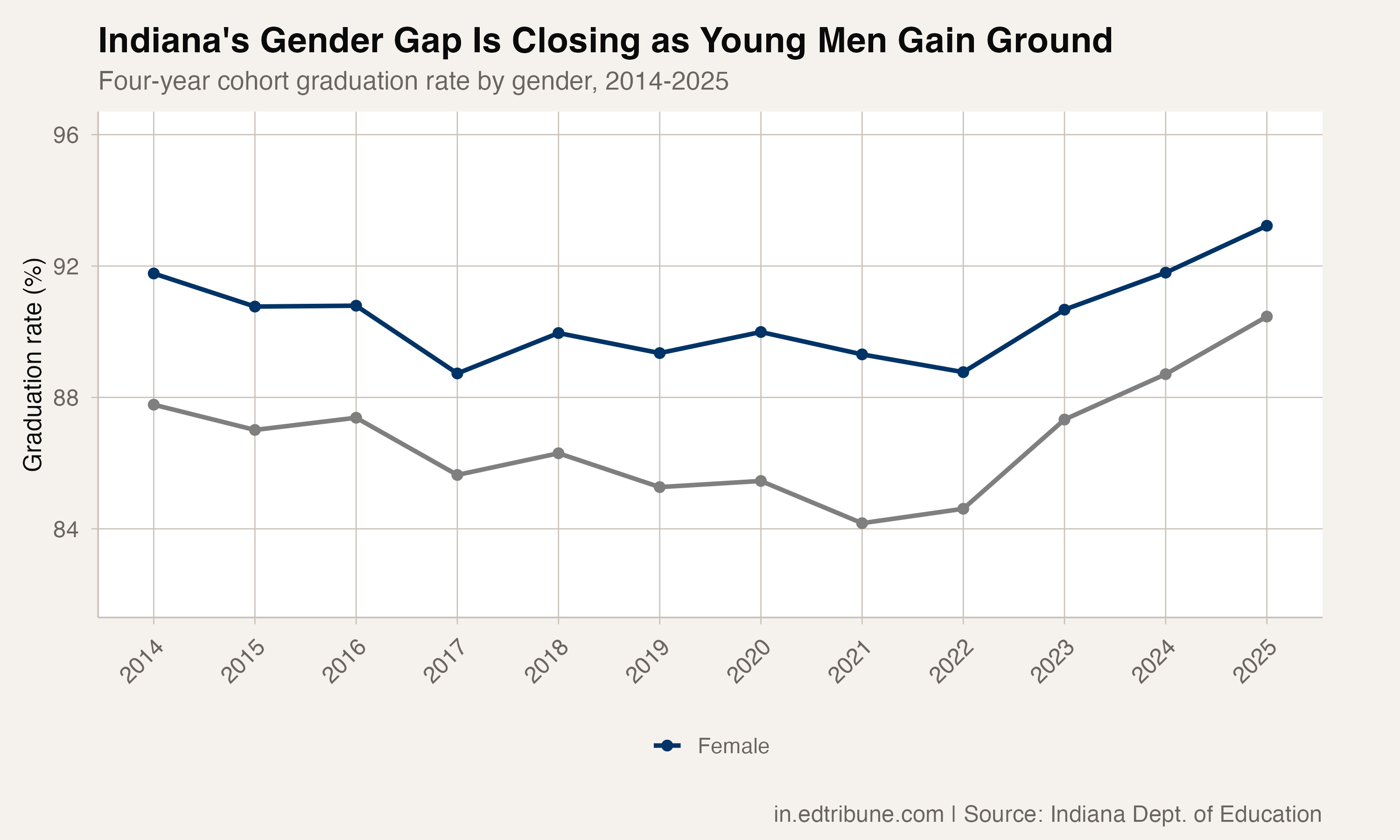
The state's male graduation rate rose from 87.8% in 2014 to 90.5% in 2025 — a 2.7 percentage point gain that outpaced the female improvement of 1.5 points (91.8% to 93.2%). The gender gap narrowed from 4.0 to 2.8 percentage points, its smallest mark in the available 2014-2025 data.
Males gained faster after 2022
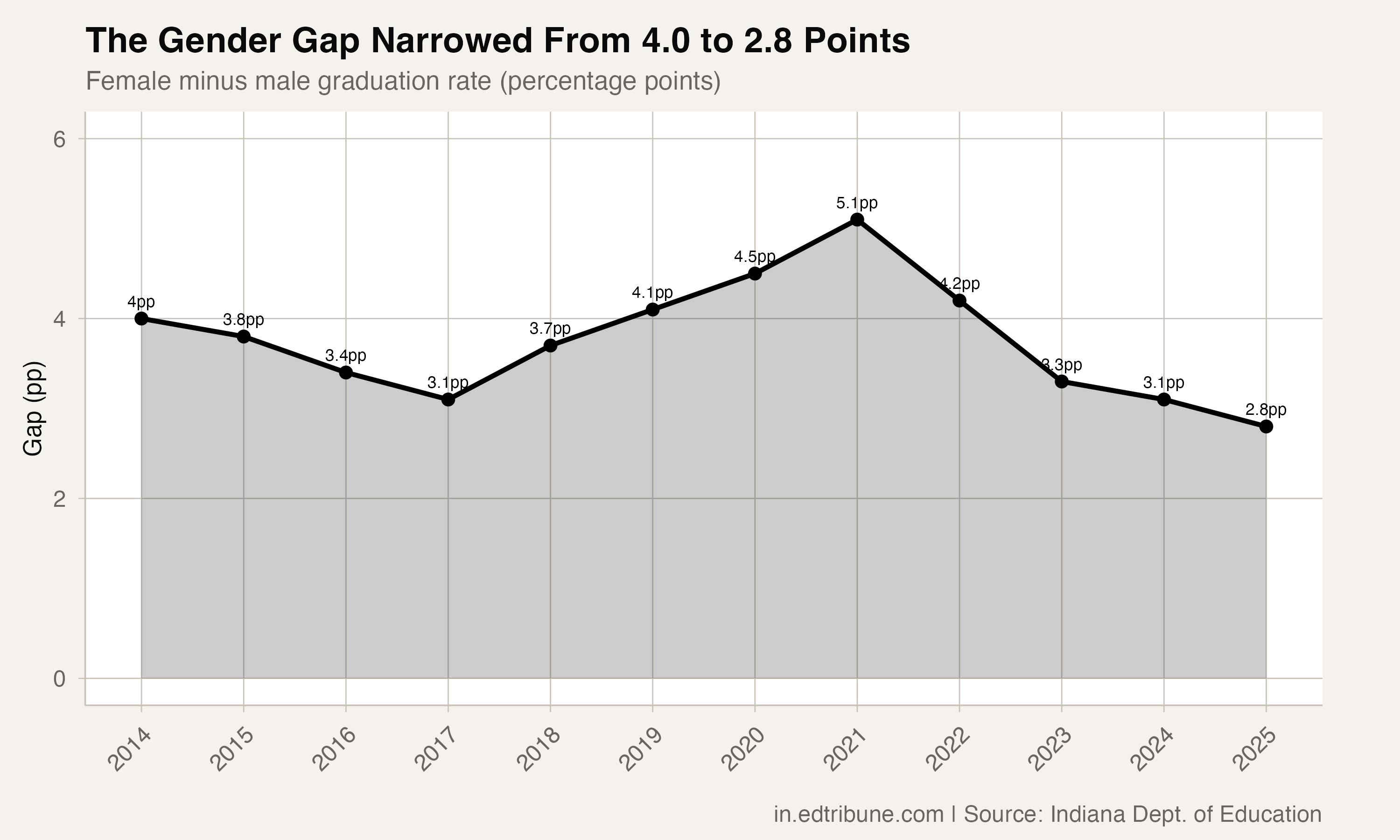
The gap did not narrow evenly. From 2014 through 2022, it fluctuated between 3.1 and 5.1 percentage points. The sharper narrowing came after 2022.
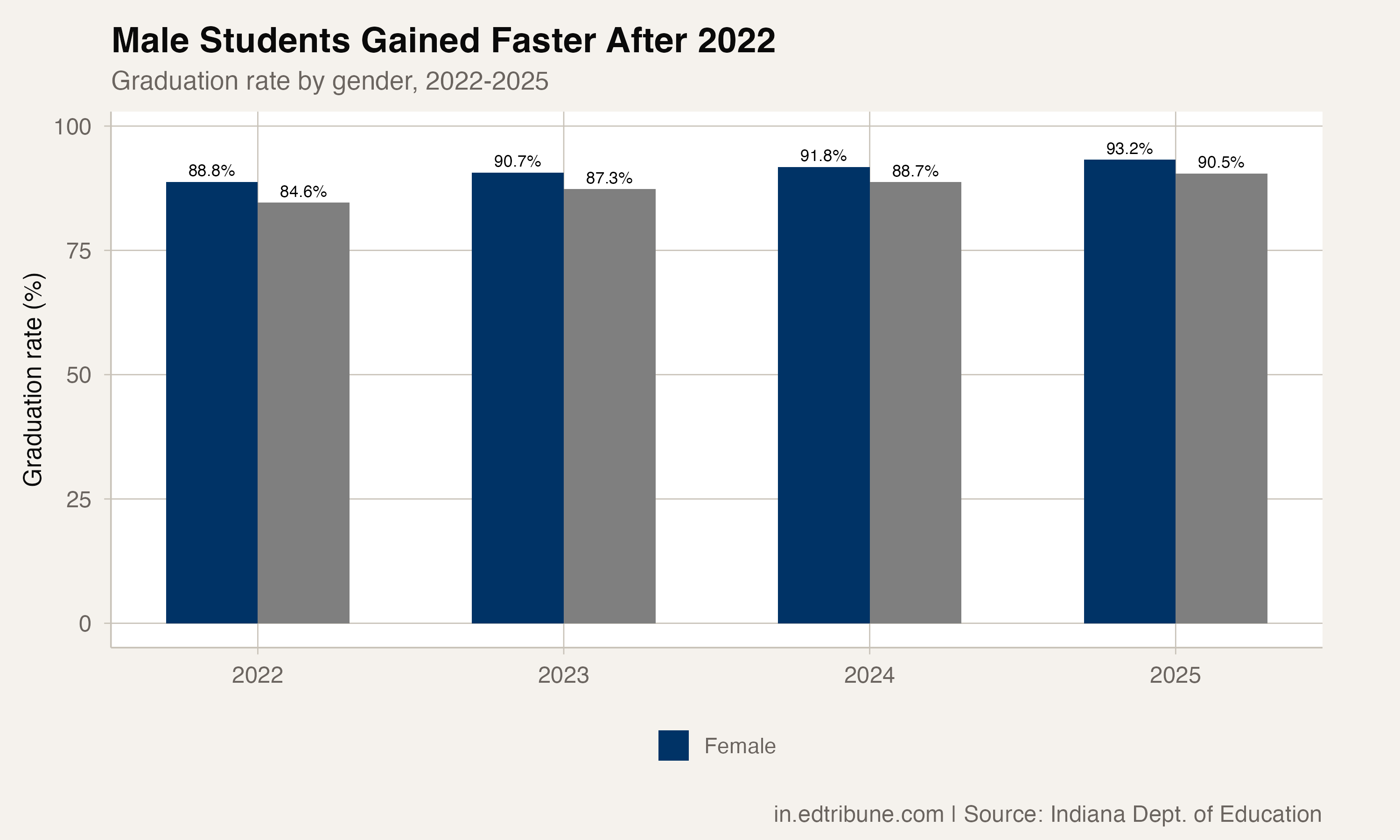
From 2022 to 2025, male students gained 5.9 percentage points while female students gained 4.5. The male rate crossed 90% for the first time in the available data in 2025. That faster male gain accounts for most of the gap closure.
The pathway question
Suggestive context, not direct evidence: Indiana's Graduation Pathways allow students to align graduation requirements with enrollment, employment or enlistment goals, according to the Indiana Department of Education (Indiana Department of Education). The state data in this analysis show the gender pattern, but they do not identify which pathway or policy choices caused it.
That distinction matters. The graduation-rate package supports the "what": males improved faster, and the gender gap narrowed. It does not by itself prove the "why."
A gap worth watching
At 2.8 percentage points, the gender gap remains meaningful. In 2025, about 1,300 more male students than female students did not graduate on time in Indiana. But the direction of the state trend is narrowing, and the recent gains reached male students at least as strongly as female students.
Detailed code that reproduces the analysis and figures in this article is available exclusively to EdTribune subscribers.
Discussion
Sign in to join the discussion.
Loading comments...