In 2017, 60.7% of Indiana's English learners graduated on time. The gap between English learners and their peers was nearly 29 percentage points. It was one of the widest equity gaps in the state's graduation data, and it had been growing.
Eight years later, English learners graduate at 92.4%, half a percentage point above the overall state average.
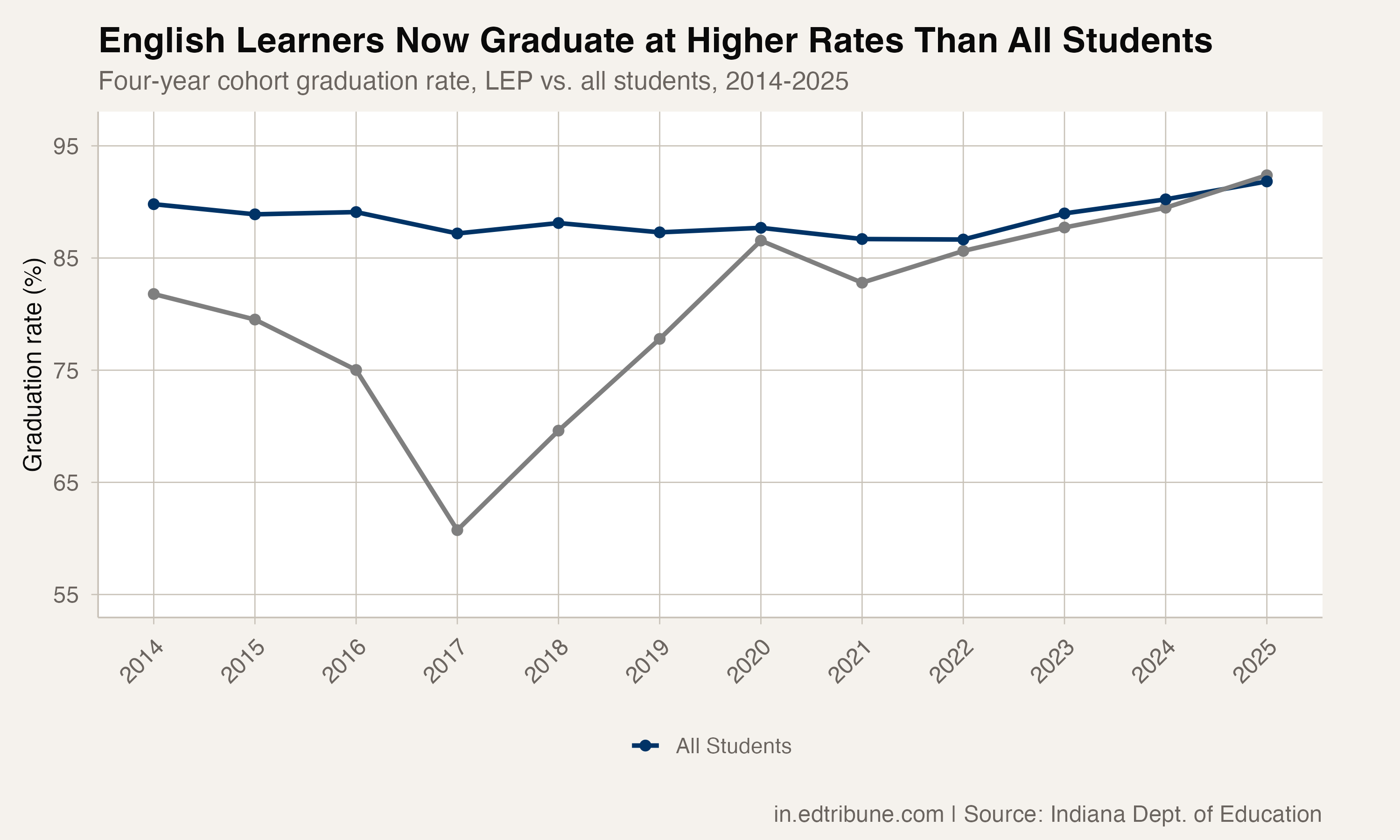
The 31.7 percentage point gain from trough to peak is the most dramatic improvement of any student group in Indiana's graduation data. It is not a gradual climb. The rate cratered in 2017, bounced around in the 80s for several years, climbed to nearly 90% in 2024, and then crossed 92% in 2025.
From widest gap to no gap
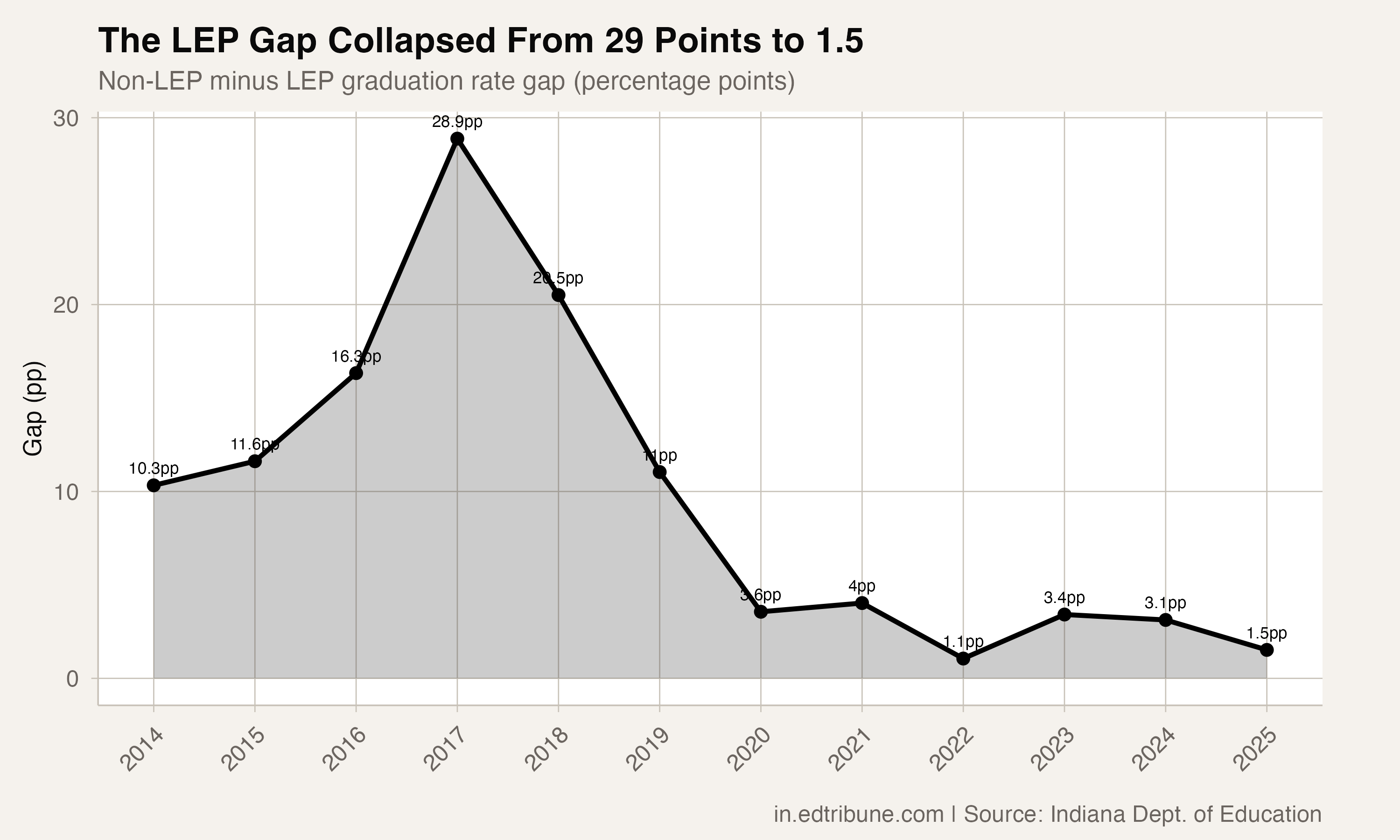
The gap between English learners and non-English-learners tells the story most clearly. In 2014, it was 10.3 percentage points. By 2017, it had ballooned to 28.9 points as the rate for English learners collapsed while their peers held steady. Then the gap began closing, slowly at first, then rapidly. By 2023 it was 3.4 points. By 2025, just 1.5 points.
English learners did not merely close the gap with their peers. They surpassed the overall state rate, which includes all students. A group that eight years ago graduated at a rate 27 points below the state average now sits above it.
A growing cohort, not a shrinking one
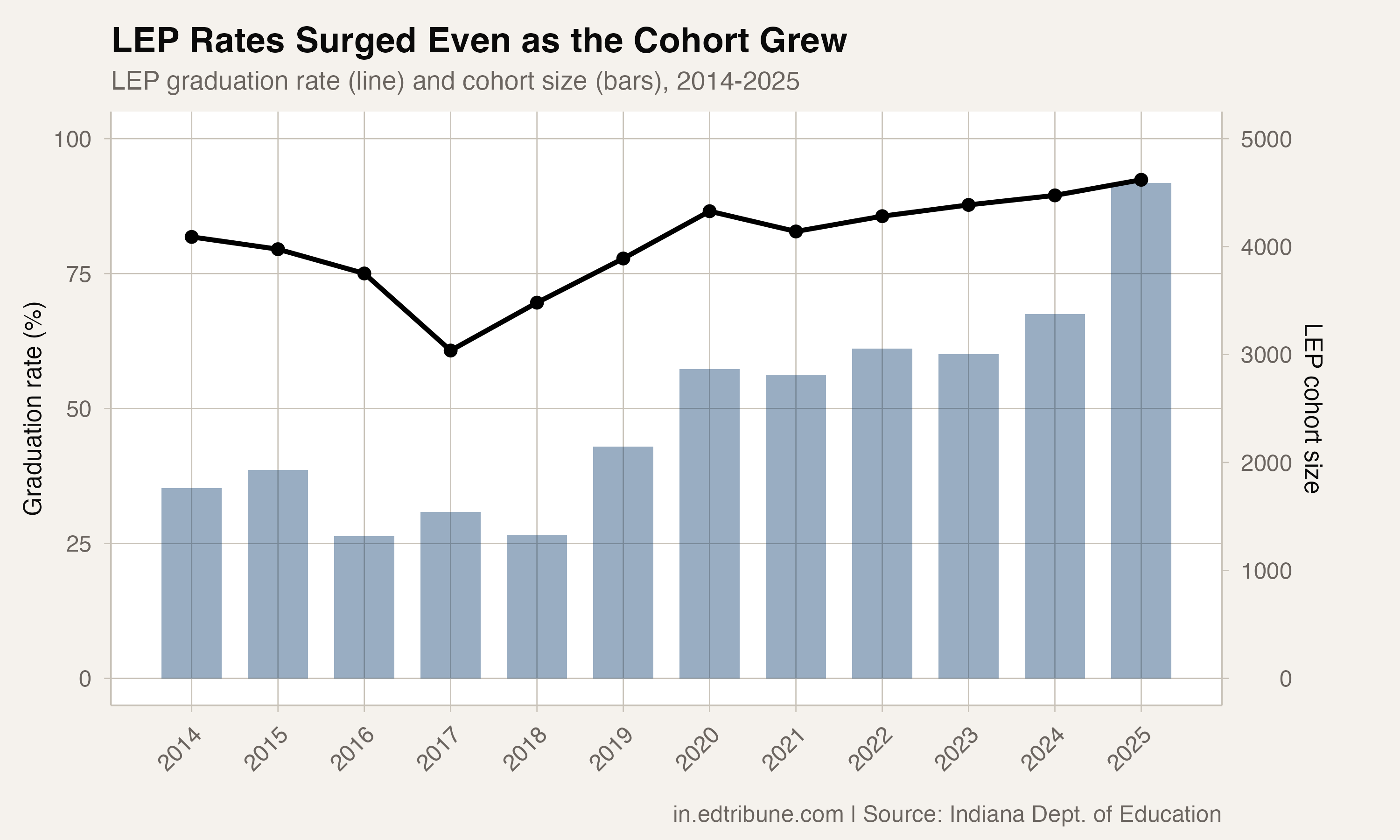
The improvement did not happen because the cohort shrank to include only the most academically prepared students. Indiana's graduating cohort of English learners has been growing, driven by the state's expanding immigrant and refugee communities. The rate improved even as more students were identified as English learners.
At Indianapolis Public Schools↗ET, where the state's largest concentration of English learners lives, English learners graduated at 96.7% in 2025, more than 4 points above the state average for the group.
What could explain this
The magnitude of the change demands scrutiny. A 32-point swing in eight years, for a population that typically faces compounding linguistic and academic barriers, is unusual in statewide education data.
Several factors likely contribute. Indiana expanded access to waiver diplomas, and English learners, who may struggle with standardized assessments in English, could benefit disproportionately from alternative pathways. The statewide waiver gap for English learners was 1.1 percentage points in 2025, relatively modest compared to other subgroups, but this only captures the most recent year.
Additionally, the definition of who counts as an English learner in the graduation cohort may have shifted. Students who were reclassified as English-proficient before their senior year would exit the cohort, potentially leaving a different mix of students in the denominator.
Even accounting for these factors, the trajectory is remarkable. English learners in Indiana went from a group in crisis to one that outperforms the average, and they did it while the cohort was growing.
Detailed code that reproduces the analysis and figures in this article is available exclusively to EdTribune subscribers.
Discussion
Sign in to join the discussion.
Loading comments...