Equity
Indiana's Graduation Gender Gap Is Closing as Young Men Gain Ground
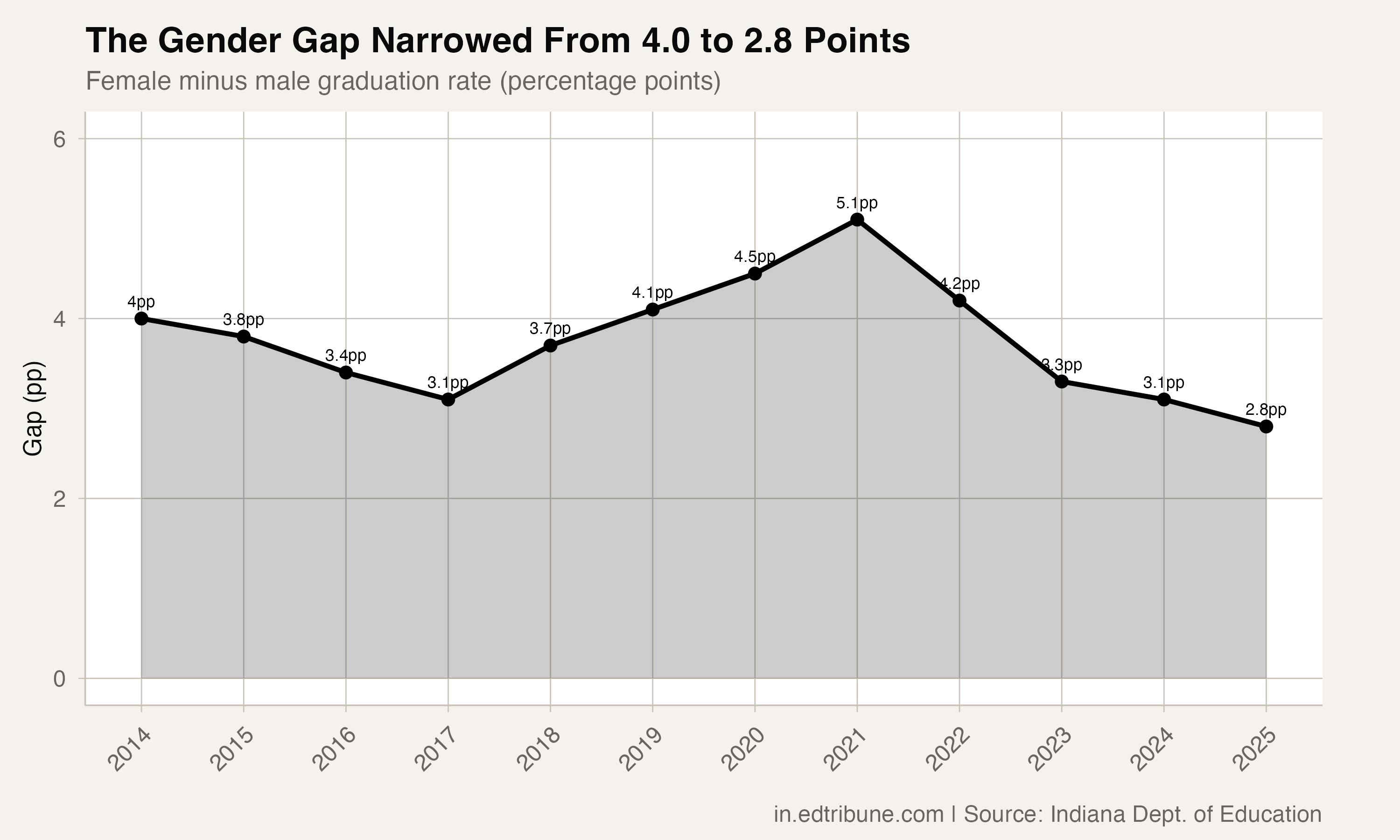
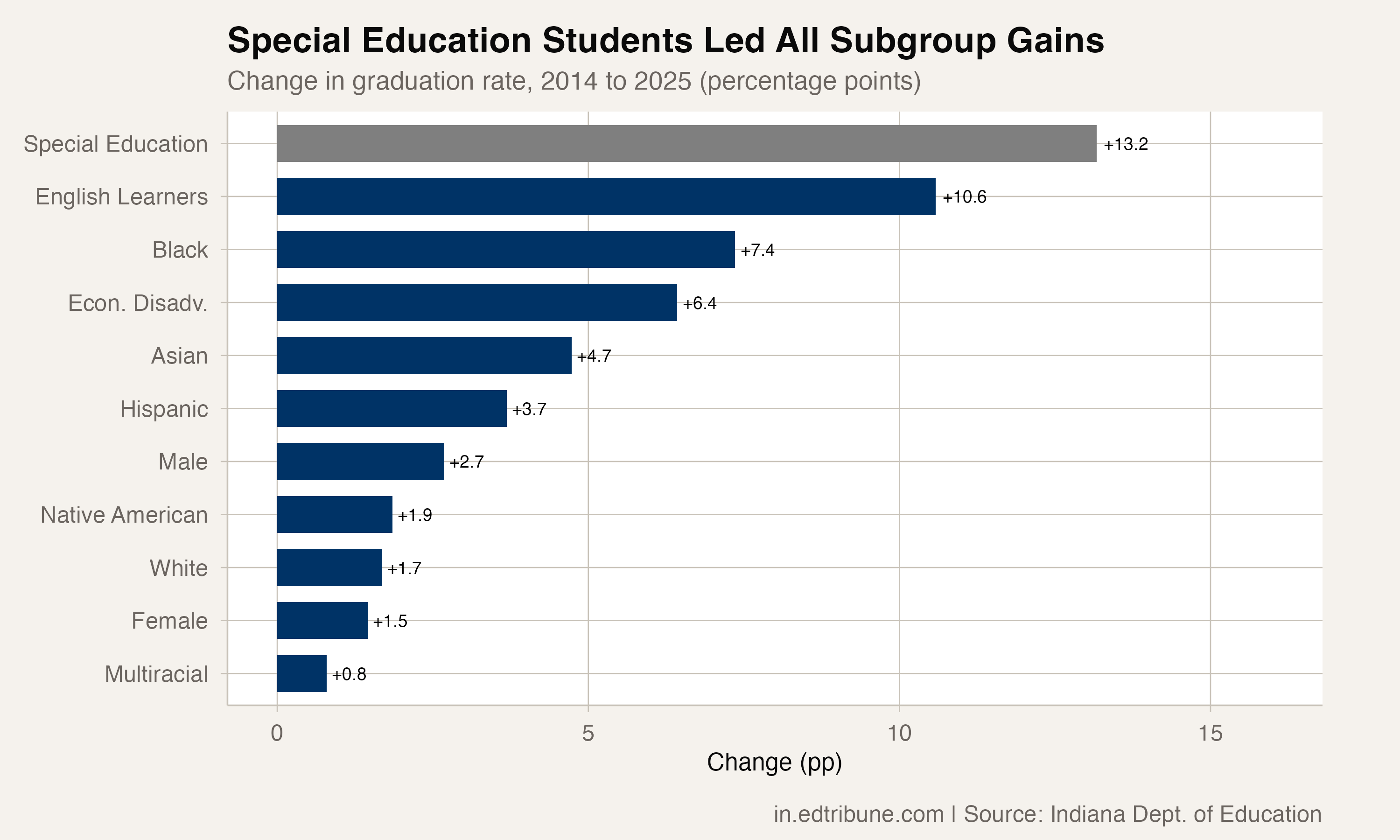
Indiana's male graduation rate gained 2.7 percentage points over a decade, narrowing the gender gap from 4.0 to 2.8 points as young men improved faster than young women.
Data-Driven Education Journalism for the Hoosier State
Education News & Data
Local education reporting from every corner of Indiana, grounded in Indiana Department of Education data.
Warren Township's chronic absenteeism fell from 63.6% to 21.4%, the largest 2021-to-2025 drop among Indiana school corporations with at least 10,000 students.
Muncie Community Schools posted five consecutive years of graduation rate improvement, gaining 13 points after being placed under state emergency management.
Indiana's Native American graduation rate rose 1.9 points from 2014 to 2025, while the white-Native American gap narrowed only 0.2 point.
Indiana's chronic absenteeism rate fell for the third straight year, but Vigo County rose to 27.4% and became the only large traditional corporation at its 2013-2025 high.
Indiana's male graduation rate gained 2.7 percentage points over a decade, narrowing the gender gap from 4.0 to 2.8 points as young men improved faster than young women.
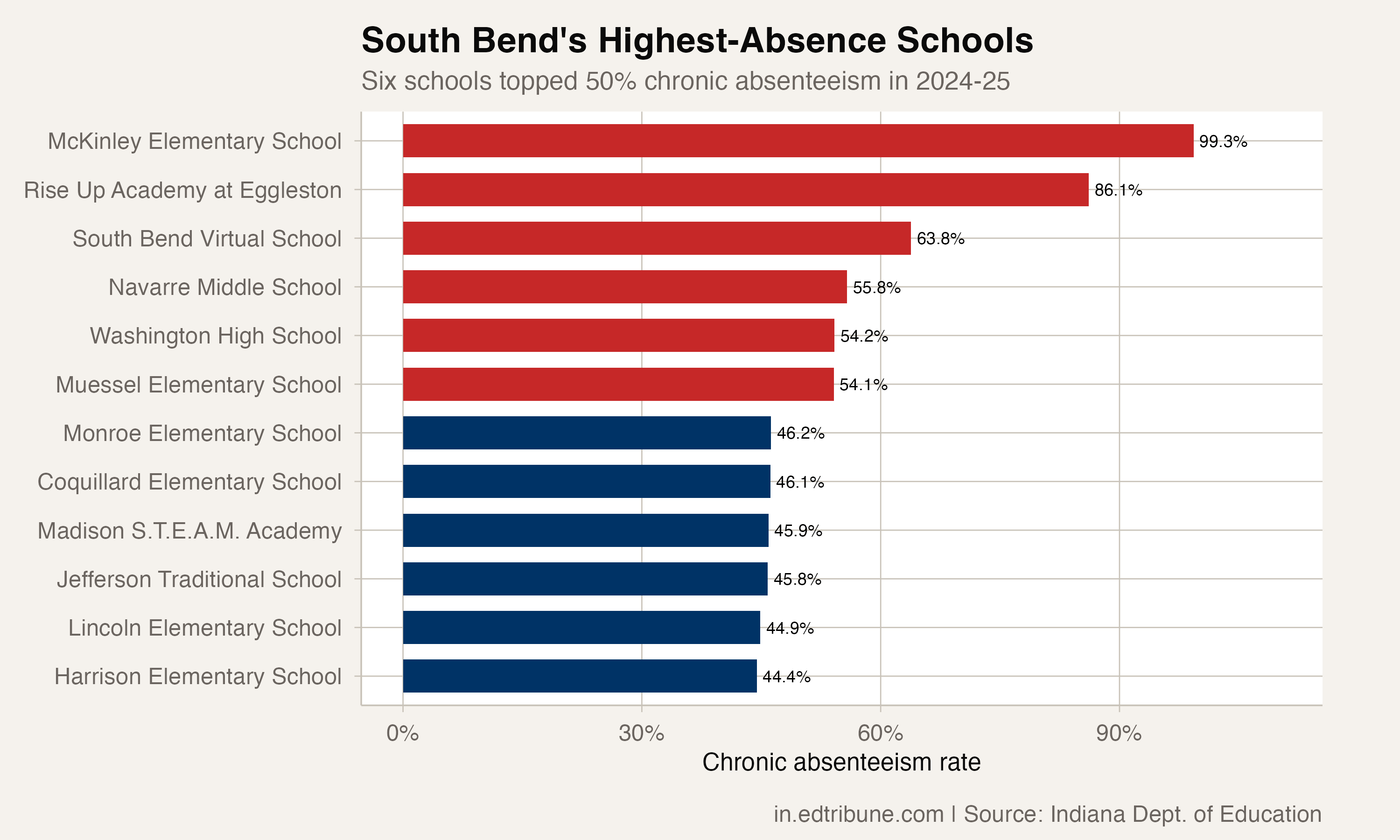
South Bend's 40.3% chronic absenteeism rate has more than doubled since 2013, and one school recorded 99.3% chronic absence.
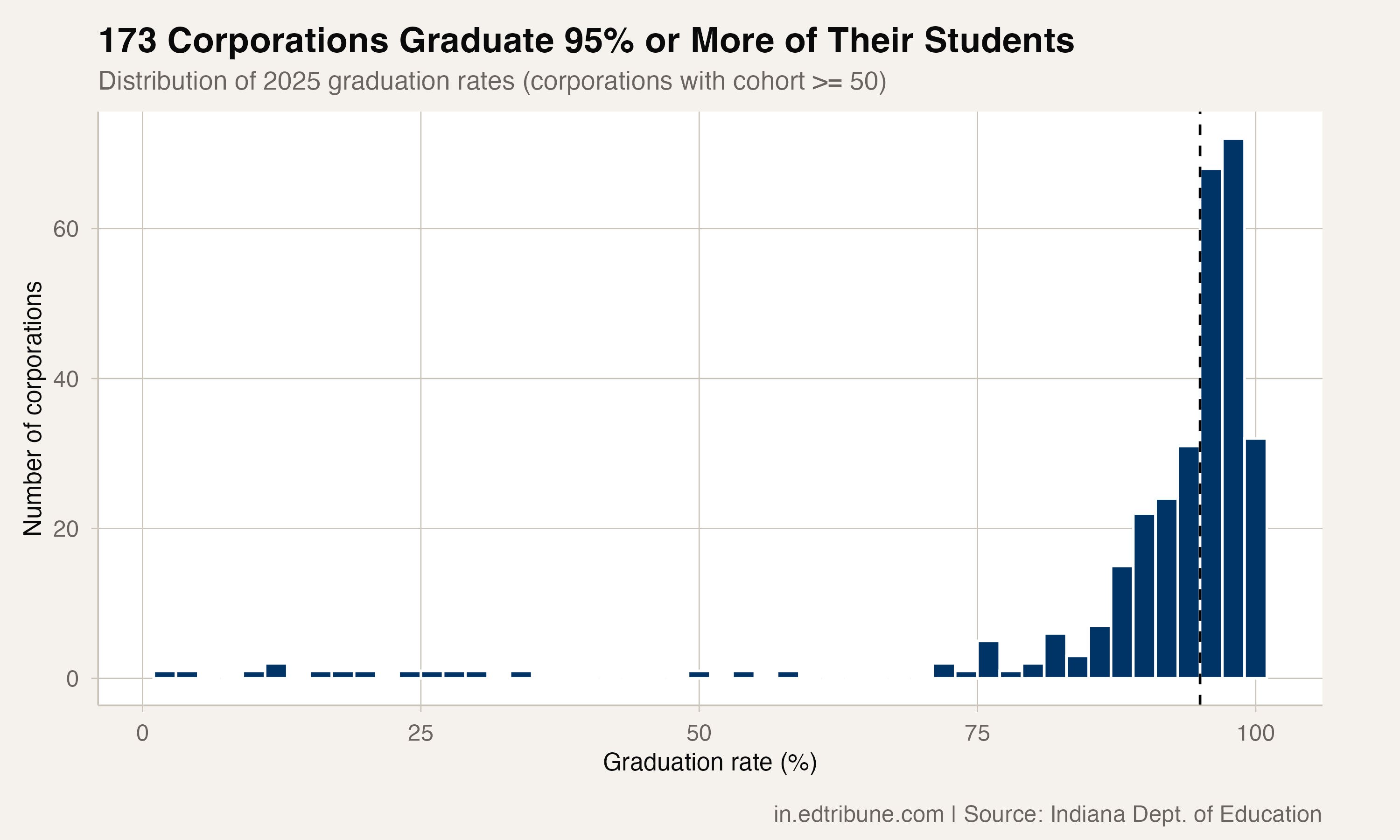
173 Indiana school corporations with meaningful cohorts now graduate at least 95% of their students, up from about 90 a decade ago, with 24 posting a perfect 100%.
Special education students gained 13.2 percentage points over a decade, the largest improvement of any subgroup, collapsing the gap with general education peers.
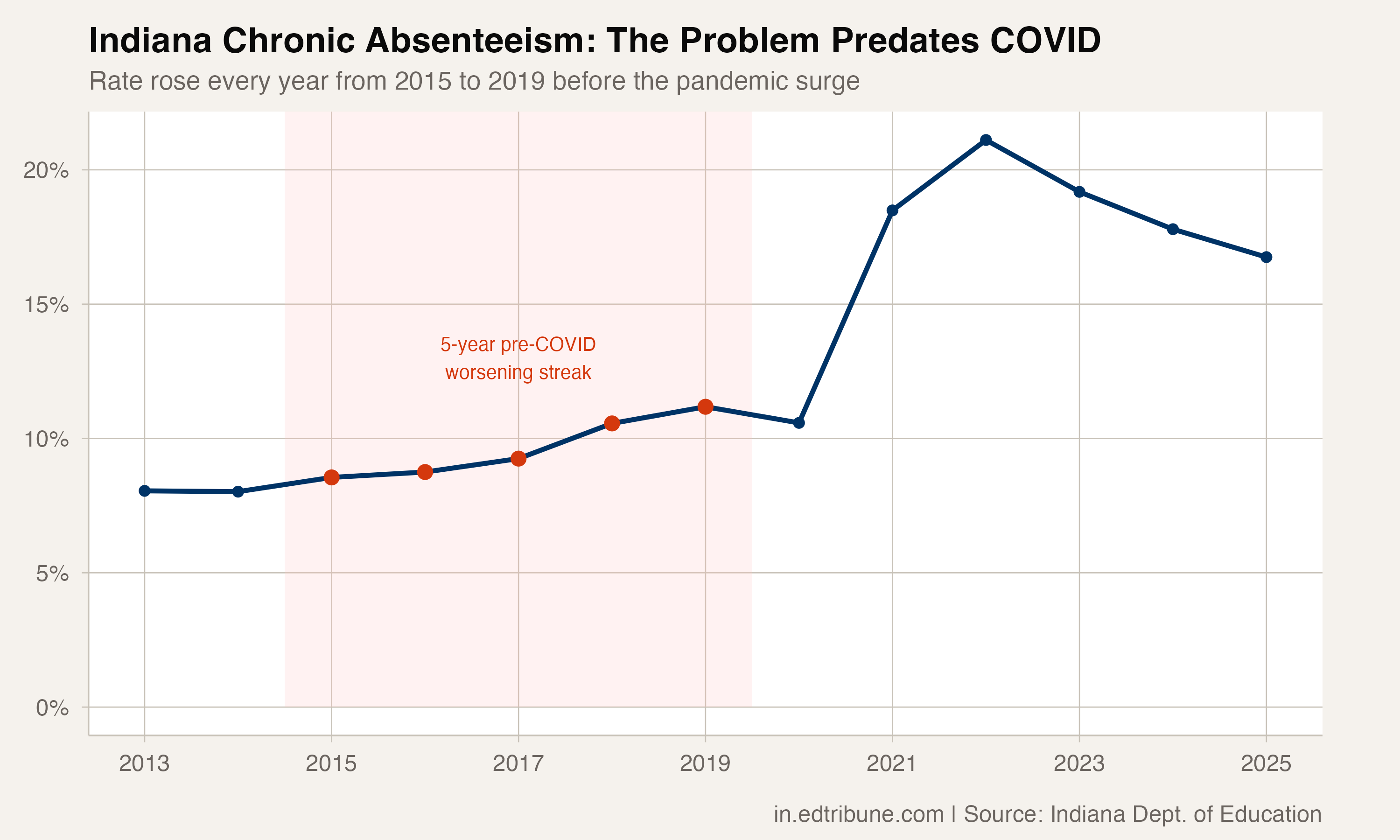
Chronic absenteeism rose every year from 2015 to 2019, crossing 10% for the first time in 2018. The pandemic accelerated a trend already in motion.
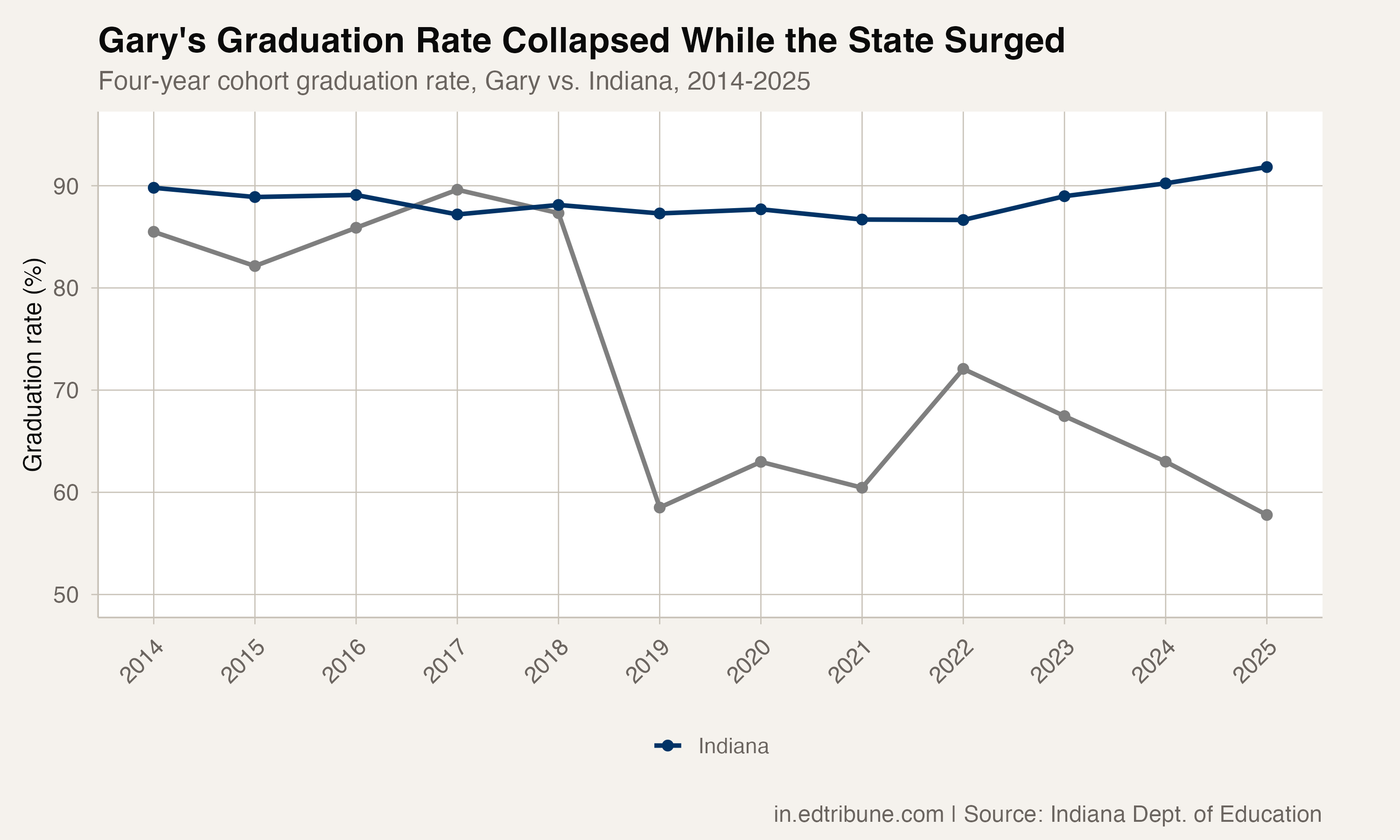
Gary Community School Corp's graduation rate fell from 85.5% to 57.8% over a decade, the steepest decline of any Indiana corporation with a cohort of 100 or more, with most of the drop arriving after the 2017 state takeover.
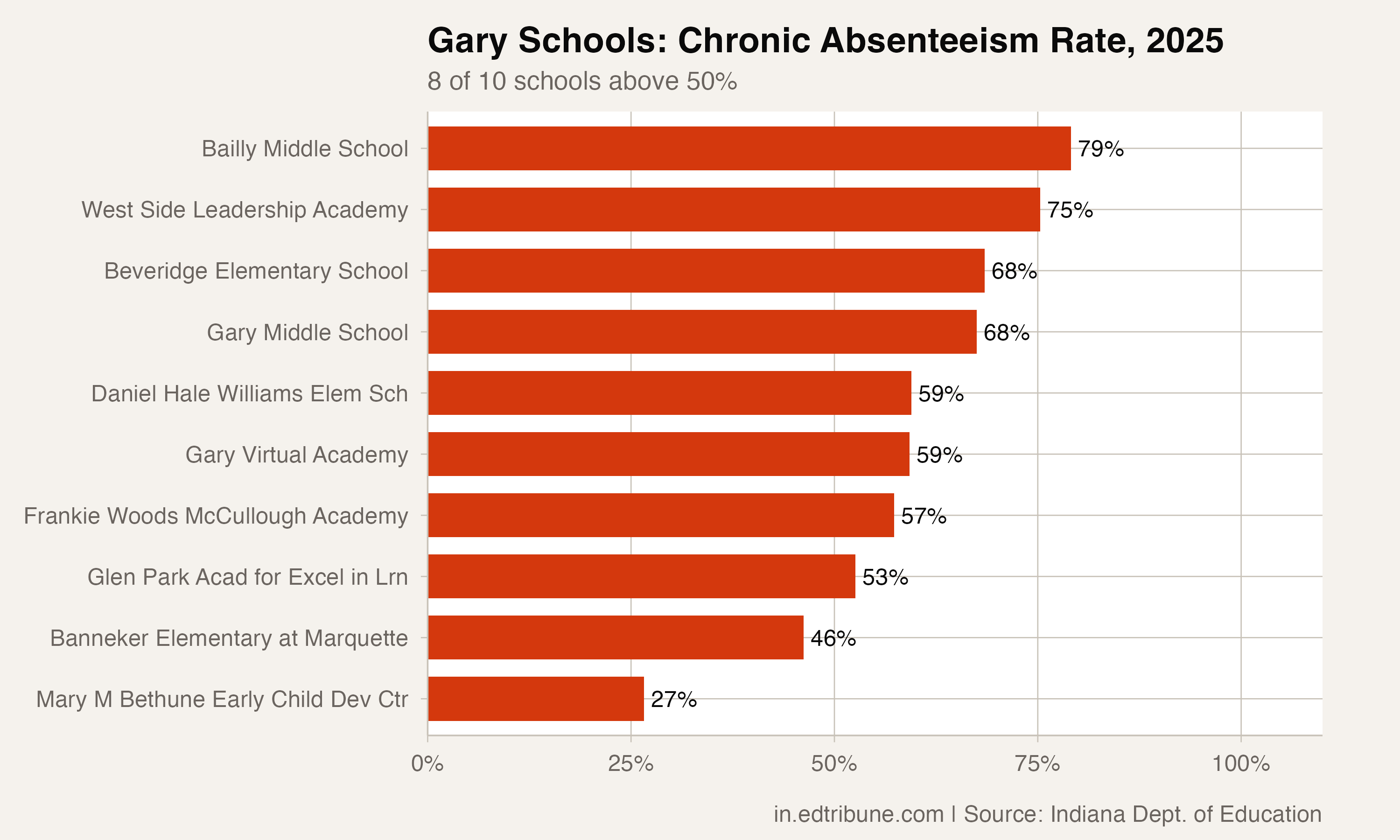
Gary Community School Corporation's 63.6% chronic absenteeism rate is the highest among traditional districts in Indiana, and it has tripled since 2013.
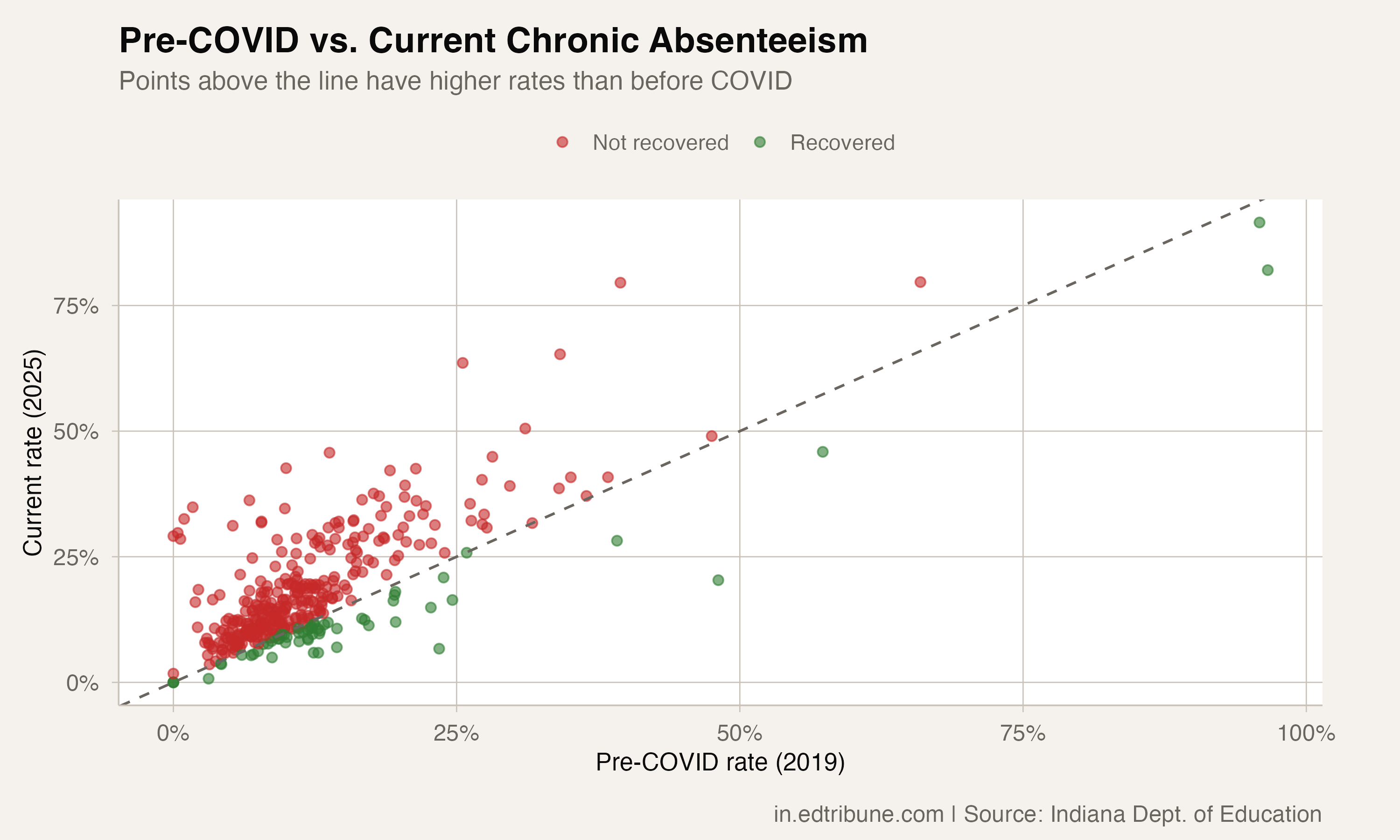
Sixty of Indiana's 385 school corporations have returned to their pre-pandemic chronic absenteeism rates. The other 325 remain above their 2019 baselines.
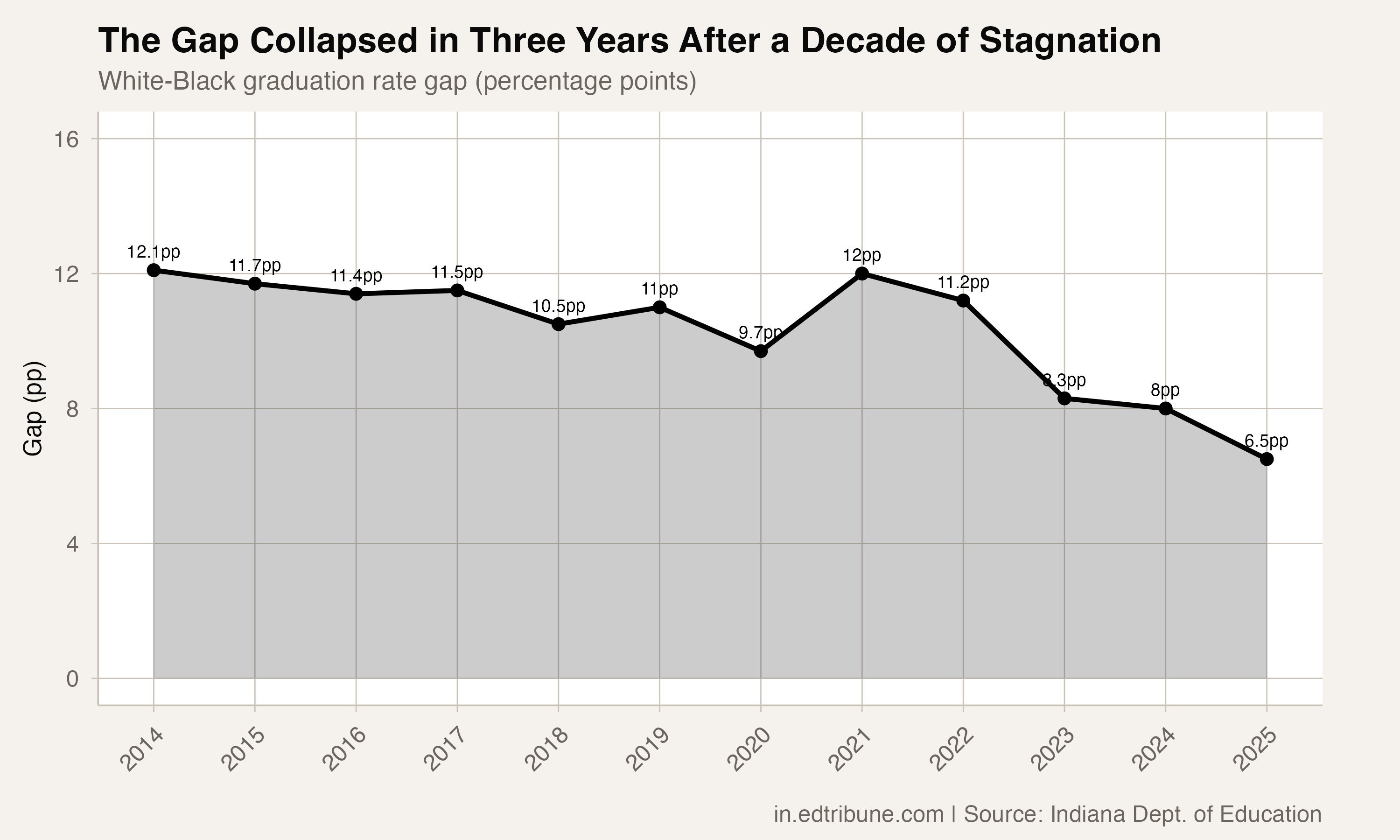
The white-Black graduation gap in Indiana narrowed from 12.1 to 6.5 percentage points, with most of the closure happening in a rapid three-year span after 2022.
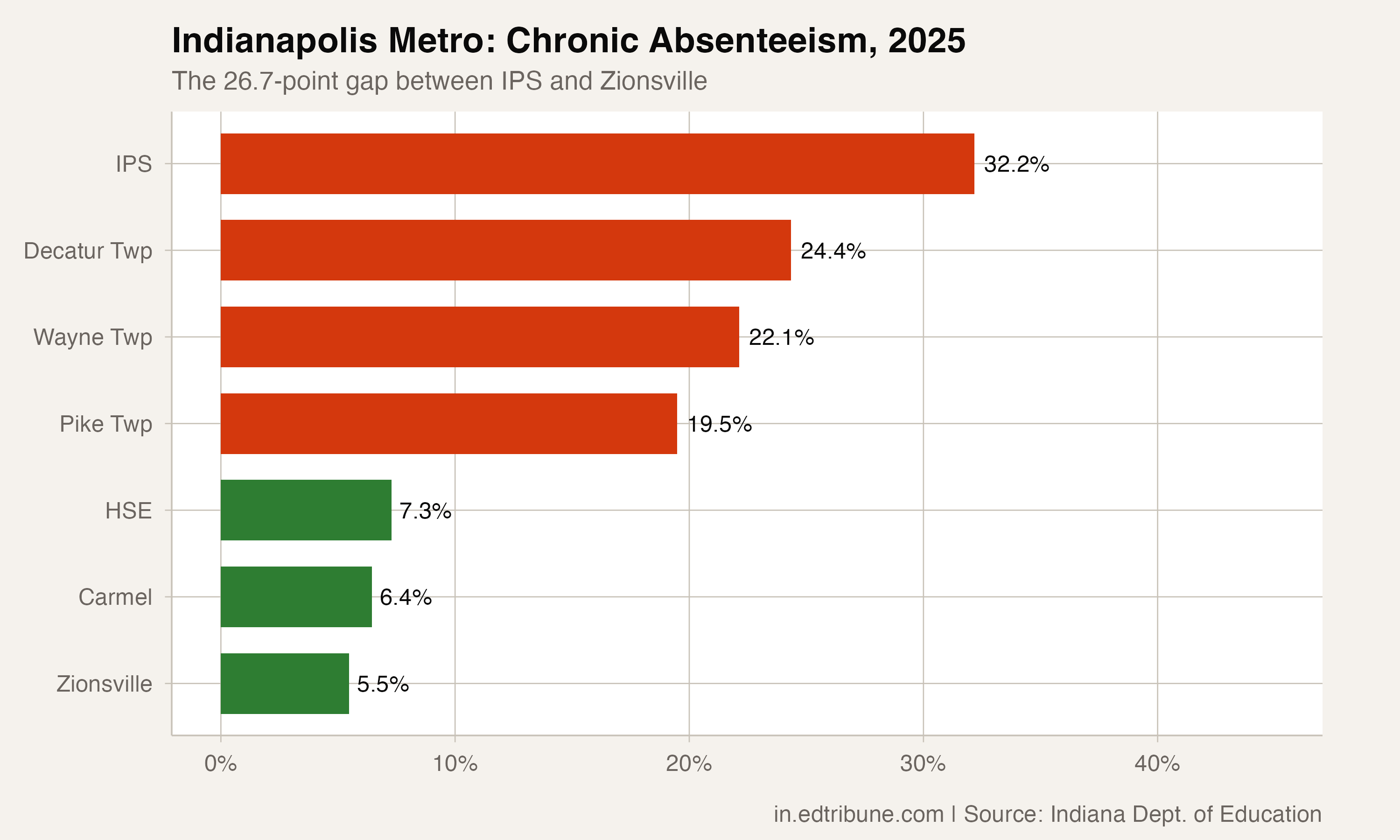
Zionsville, Carmel, and Fishers keep chronic absenteeism under 8%. IPS, three years into a steady decline, is at 32%, a 26.7-point metro gap.
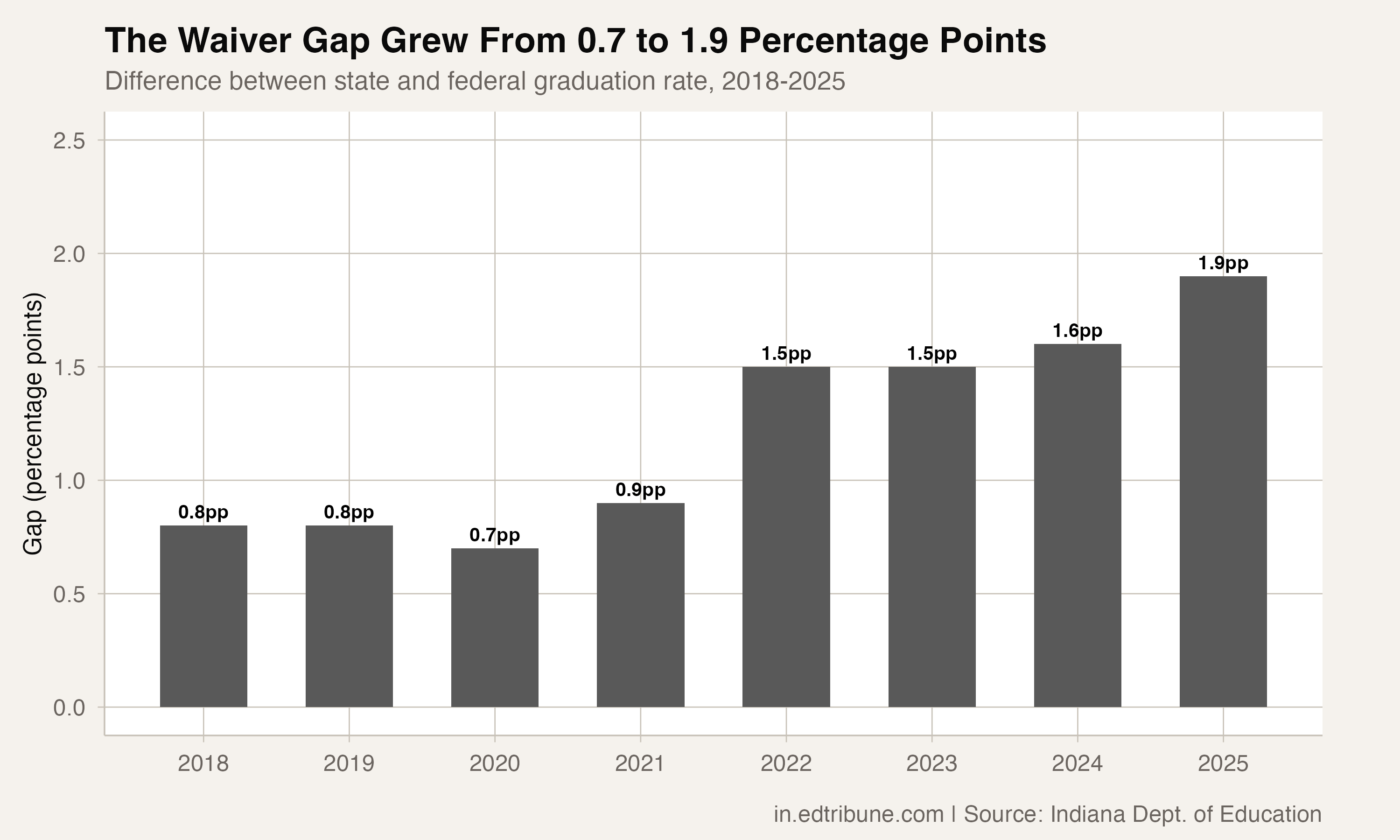
Indiana's grad rate gap (state vs. federal) nearly tripled since 2020. About 1,600 students now earn diplomas through waivers, not standard requirements.