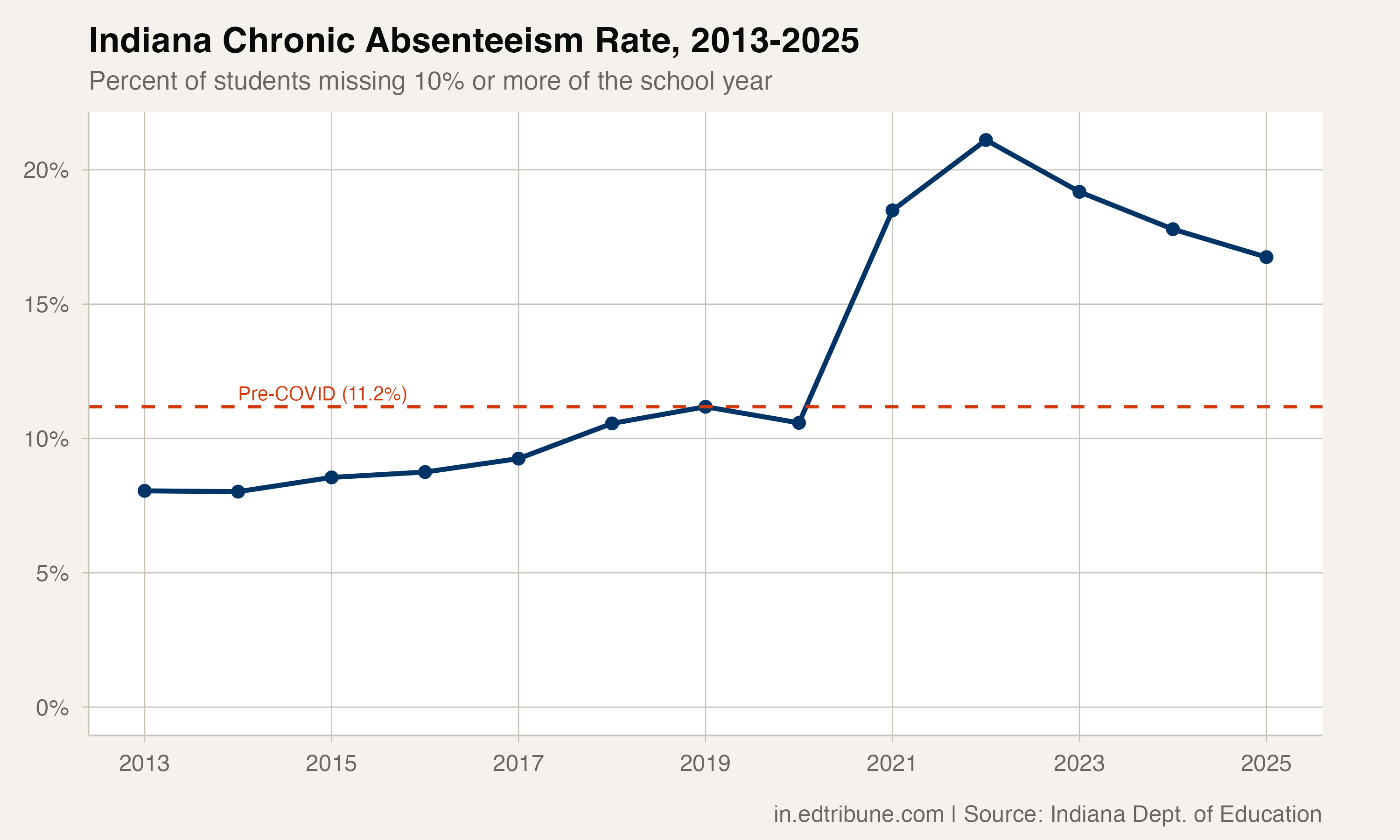
Indiana's chronic absenteeism rate has fallen for three consecutive years. In 2022, at the peak of the post-pandemic attendance crisis, 21.11% of the state's students missed 10% or more of the school year. By 2025, that figure had dropped to 16.75%. Progress, undeniably. But the trajectory tells a more complicated story.
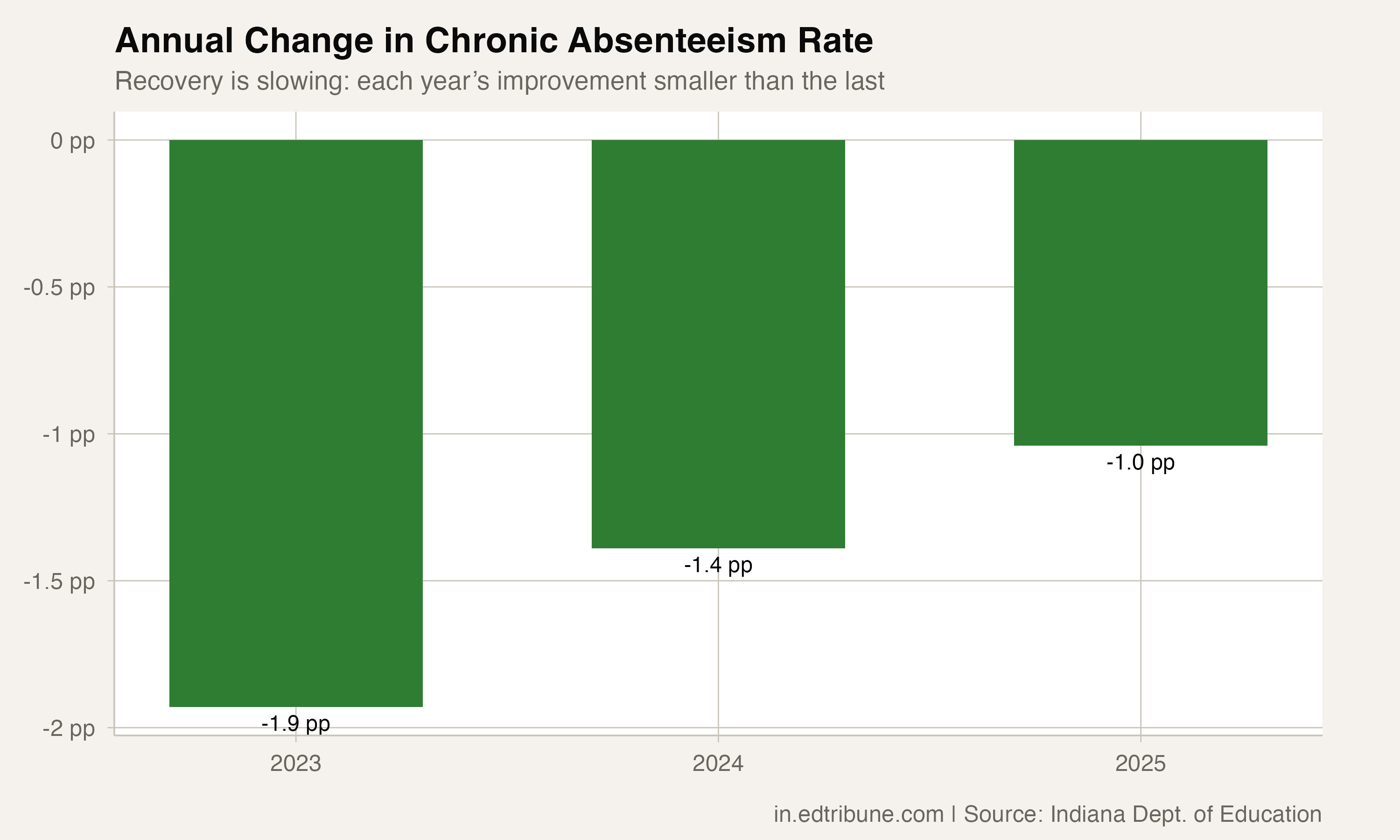
The improvement in 2023 was 1.93 percentage points. In 2024, it was 1.39. In 2025, it was 1.04. Each year's gain has been smaller than the last.
What 43.9% recovered means
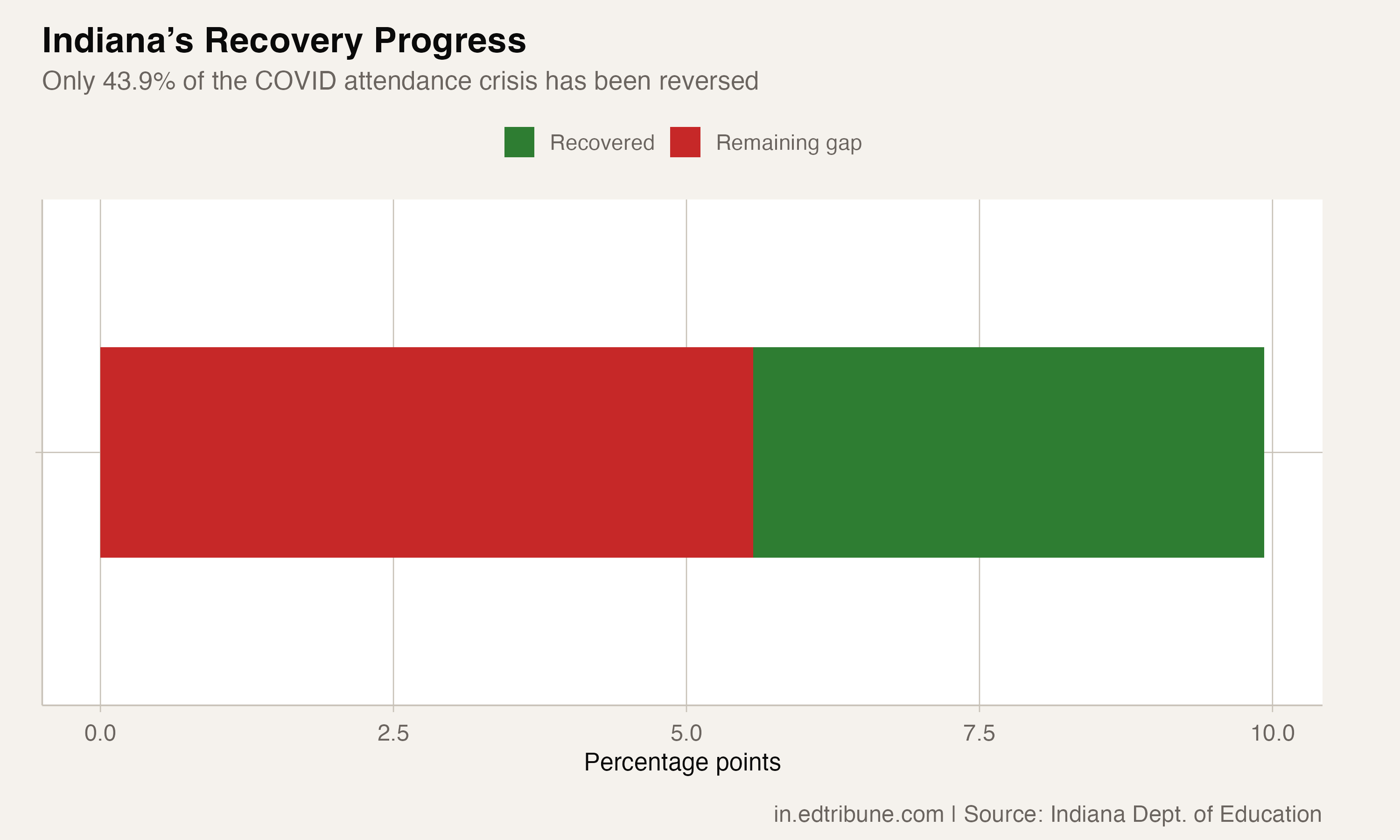
The state's pre-COVID chronic absenteeism rate was 11.18% in 2019. The pandemic pushed it to 21.11%, a gap of 9.93 percentage points. Three years of improvement have closed 4.36 of those points, or 43.9% of the total ground lost. More than half the damage remains.
At the average pace of recovery over those three years, roughly 1.45 percentage points per year, Indiana would not return to its 2019 rate until 2029, a full decade after the pandemic began disrupting school routines.
But there is reason to doubt even that timeline. The deceleration pattern suggests the easy gains have already been captured. The students who returned to regular attendance first were likely those whose absence was most directly tied to pandemic disruptions: quarantine protocols, remote learning habits, temporary instability. The 195,344 students who remain chronically absent in 2025 may face deeper structural barriers: transportation, housing, chronic health conditions, disengagement that a robocall cannot reverse.
The national pattern holds here too
Indiana's deceleration mirrors what researchers are finding nationally. A February 2026 analysis from the American Enterprise Institute described national recovery progress as "stalling," with the hardest-to-reach populations still absent at elevated rates. Indiana's trajectory fits that pattern precisely: strong initial improvement, followed by diminishing returns.
The Indiana General Assembly responded to the crisis with two laws. SB 282 in 2024 required K-5 attendance intervention when a student misses five or more days in a 10-week period. SEA 482 in 2025 extended those requirements to grades 7-12 and mandated standardized absence categories across the state. Schools must now refer habitual truants (those with 10 or more unexcused absences) to prosecutors.
64,928 students above the pre-COVID line
The gap between Indiana's current chronic absenteeism count and what the count would be at pre-COVID rates is 64,928 students. That is roughly the population of Terre Haute. These are students who, in a pre-pandemic attendance culture, would have attended school regularly but now do not. At the state level, third graders who are chronically absent have a 74% IREAD pass rate compared to 89% for their peers, a 15-percentage-point gap in the foundational reading assessment that determines whether students advance to fourth grade.
Indiana uses ADM (Average Daily Membership) count-date enrollment for funding, not Average Daily Attendance. Chronic absenteeism does not directly reduce per-pupil state aid the way it does in states that fund schools based on how many students actually show up each day. The consequences are academic, not fiscal, until enrollment flight follows attendance flight, and schools lose both the students and the funding.
At the current pace, Indiana will still have more than 170,000 students who are chronically absent next year. Three years of gains added up to 4.4 percentage points. The pandemic spike was 9.8 points. The arithmetic is simple and unfavorable: the recovery is real, it is slowing, and the finish line is receding.
Detailed code that reproduces the analysis and figures in this article is available exclusively to EdTribune subscribers.
Discussion
Sign in to join the discussion.
Loading comments...